Artwork advice
How to prepare your logo for large-format printing
Find better logo files, check image quality and prepare a clear artwork brief for gazebos, flags and event displays.
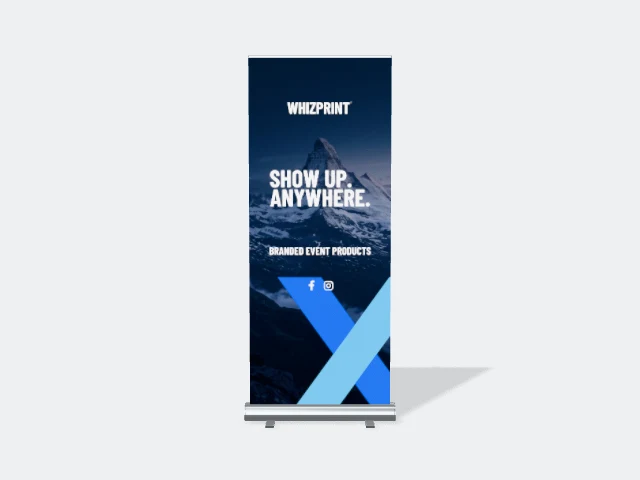
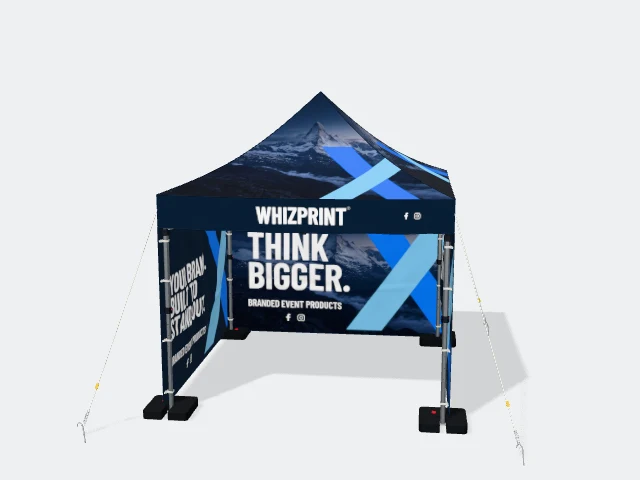
Illustrative preview; check the selected product configuration for included items.
Find the original artwork
Start with the files from your designer or brand guidelines rather than a screenshot from your website. A vector logo can be resized without the pixelation associated with enlarging a small raster image. File extensions alone do not guarantee quality: a PDF can contain a low-resolution bitmap, and an SVG may reference embedded images. Ask for the original vector artwork if you are unsure.
Check photographs at the intended size
A photograph that looks sharp on a phone may not contain enough detail for a large wall. Review the original file at the scale it will be printed, taking the expected viewing distance into account. There is no single resolution figure that answers every large-format job. Avoid repeatedly saving compressed copies, and do not assume enlarging the pixel dimensions restores missing detail.
Keep useful logo variants together
Prepare light and dark versions if you have them, plus any approved colour references and fonts. A dark logo can disappear on a dark photograph, while a white logo may lose definition on a pale background. Keep the registration symbol and other details consistent with the supplied brand artwork. Tell the designer which elements must remain unchanged.
Design for the actual print area
Different products have different panel shapes, seams, edges and visible areas. Use the artwork area for the selected product rather than copying a template from a similar-looking item. Keep critical text clear of edges and check how the design continues between panels. Studio helps you inspect placement, but a screen preview cannot guarantee an exact match to the colour of a printed material.
Send a complete brief and check the proof
Include the chosen product, sizes, logo files, wording, colour references and the main purpose of the display. If the original files are missing, tell us what you do have so we can discuss the next step. Review spelling, contact details, panel placement and the approved artwork before production. A clear brief helps avoid revisions based on different assumptions.