Buying advice
Shell scheme graphics vs lightboxes: planning your booth
Compare venue-wall graphics with freestanding lightboxes and check the information you need for an exhibition booth.
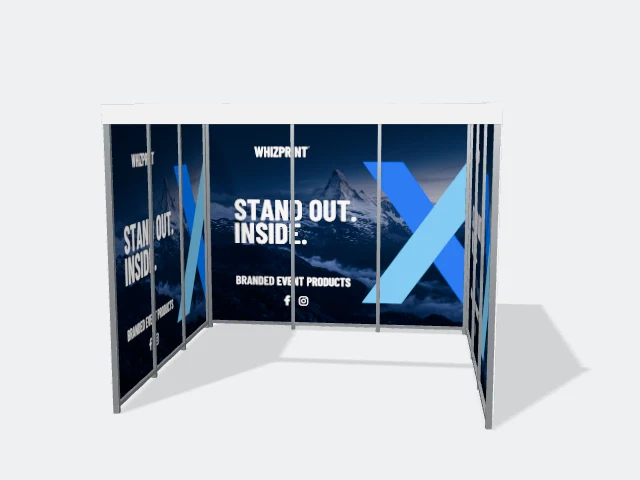
Illustrative preview; check the selected product configuration for included items.
Understand what the venue is providing
A shell scheme normally gives you a defined booth structure to work within. Before buying graphics, obtain the organiser’s specification for that particular event. Check panel dimensions, visible areas, posts, fascia, fixings and usable floor space. A 3 m booking should not be treated as proof that one uninterrupted 3 m graphic will fit its wall.
Graphics and lightboxes do different jobs
Shell scheme graphics sit on the venue walls, while freestanding lightboxes stand inside the booth and illuminate their fabric graphics. The first approach uses the supplied structure; the second introduces a separate display within it. Compare the visual result, installation requirements and available floor space rather than choosing from an image alone.
Plan around posts and interruptions
With venue-wall graphics, decide whether the message should work independently on each visible panel or continue across several. Keep logos and key wording away from posts and other interruptions. With freestanding displays, check the position of feet and the space behind or beside the frame. The access route and any venue services still need to remain usable.
Check the booth layout in Studio
Whizprint Studio lets you explore straight, L-shaped and U-shaped shell scheme layouts. Use the venue plan while comparing them, and check the selected sizes against usable space. The venue walls, posts and fascia shown for context are not supplied as part of the graphics or lightbox setup. Confirm the actual product configuration before ordering.
Send the specification with your enquiry
If you are unsure which approach suits the stand, send the organiser’s plan, event date and your intended activity. Include whether you need product displays, a counter or space for meetings. Those details make it easier to discuss a practical arrangement and avoid designing artwork around an assumed panel size.